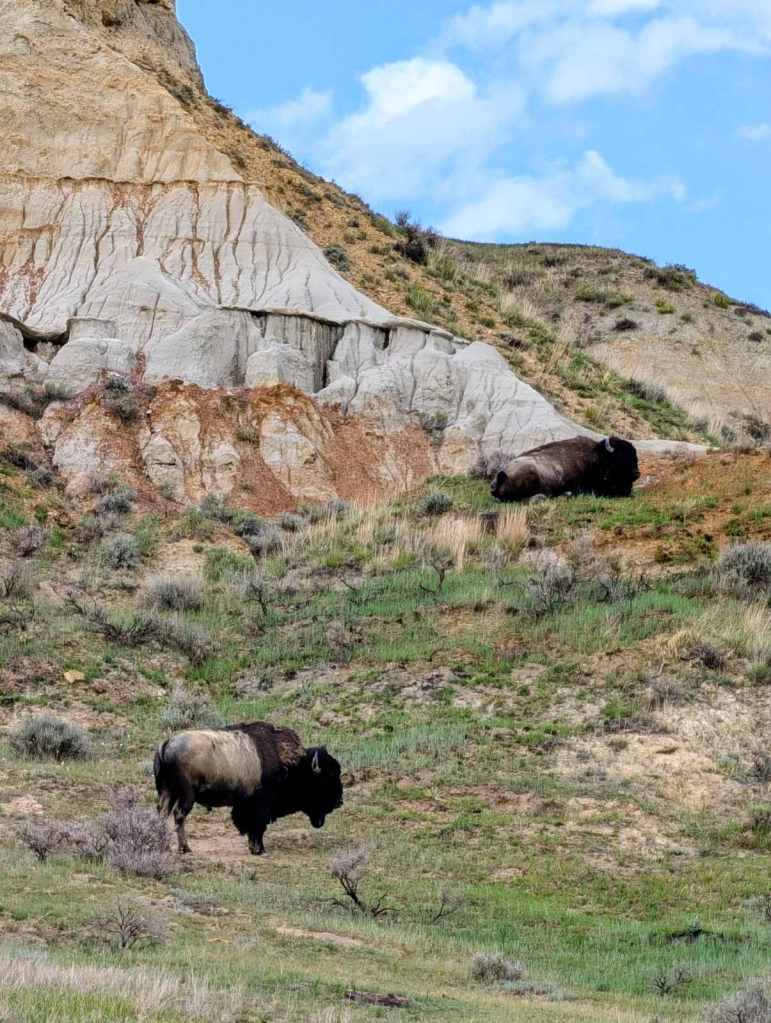
The trip had a job to do. I was on a work errand that had taken me far east though the river country of Idaho, the mountains of Western Montana and across the plains of Eastern Montana, North Dakota and Western Minnesota — a long haul in the work truck but through gorgeous, varied country. On the drive out along I-94, I caught signs for Theodore Roosevelt National Park near Medora, North Dakota. I didn’t stop that day. But the image of those ever-eroding badlands buttes stayed with me, and once the job was done, I set my route home to include a night there. I’m glad I did.
President Theodore Roosevelt wrote that the man he became was shaped here in this land. “I never would have been President,” Roosevelt said, “if it had not been for my experiences in North Dakota.” The park that bears his name was established in 1978, protecting the land that once restored him. What Roosevelt found restorative, others had called home for thousands of years, in fact since time immemorial. The Mandan, Hidatsa, and Arikara — the Three Affiliated Tribes — knew this land long before any European set eyes on it. The badlands buttes were vision quest sites. The Little Missouri was a lifeline. The Hidatsa phrase Maah Daah Hey — roughly “land that has been around a long time” — still names the 144-mile trail that threads through the park today. The Crow, Sioux, Cheyenne, Blackfeet, and others moved through and hunted here as well. Roosevelt came to this place to be remade by it. He wasn’t the first.
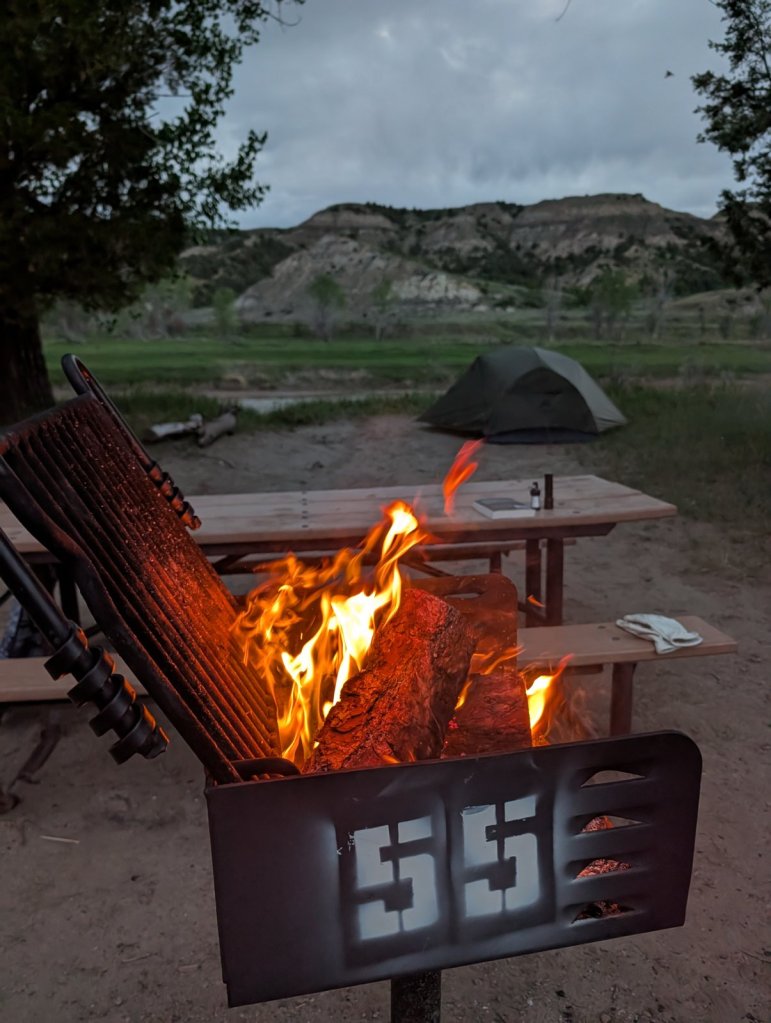
I arrived to sunny blue skies. The day before I had reserved Site 55 at Cottonwood Campground which put me right on the bank of the Little Missouri — a slow, silty river that winds through a corridor of cottonwoods with stripped-clay buttes rising behind them. I set up camp, took in the surroundings, and felt the particular satisfaction of a campsite that exceeds expectations.
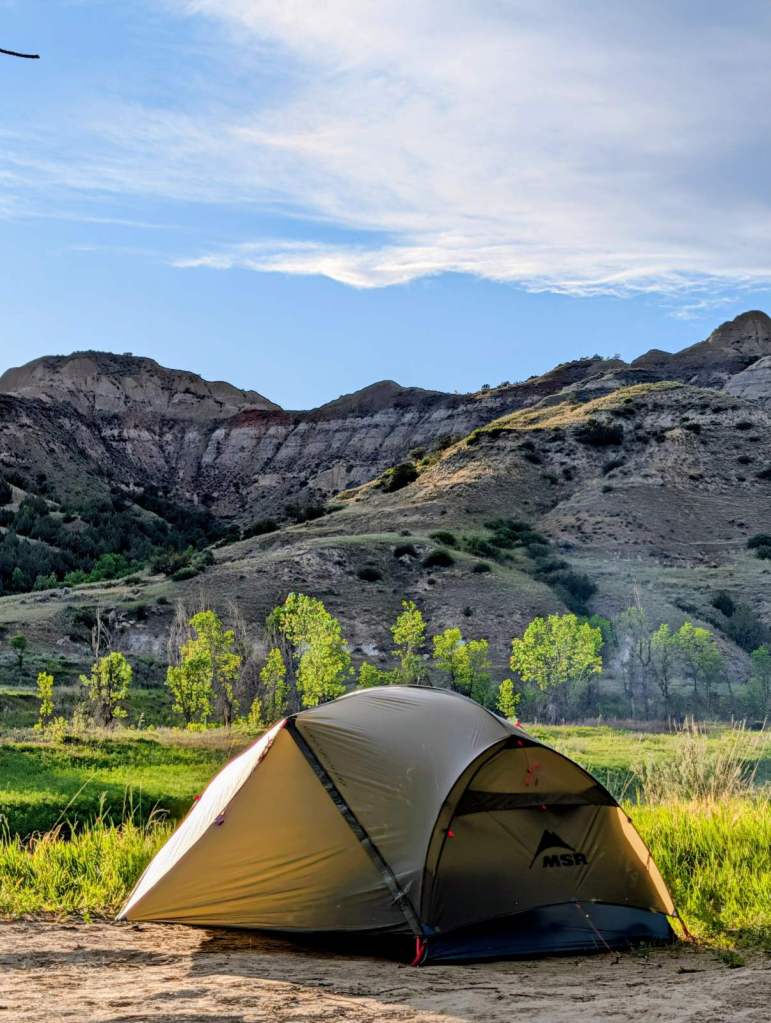
That evening the buffalo (Bison bison) came down from the fields and hillsides at dusk, making their way toward the water across the river. One by one, then in small groups, until a dozen was spread along the far bank, grazing quietly as the light went golden, then orange, then gone. They lay down across the river from my tent as I got a fire going. I made dinner, cracked a book, and sat with the fire and the sound of the river.
After sunset the sky changed. What had been clear turned quickly — clouds muscling in from the west, the air pressure dropping, the cottonwoods beginning to stir. Then the wind came in earnest.
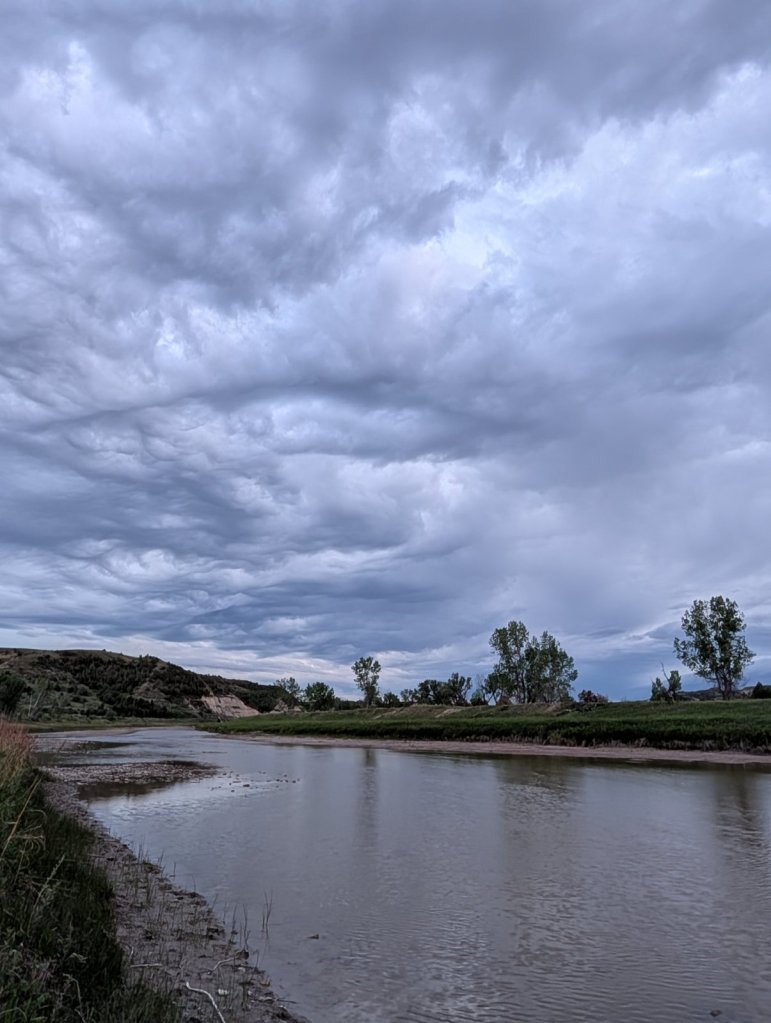
The thunderstorm came in with sustained winds at around 30 miles an hour — strong enough to lay the campfire flames nearly horizontal and send sparks skipping fifty feet across the ground. It was a neat show, and fire danger was low, but I doused the fire fast, and watched the cottonwoods overhead working hard, their trunks groaning, branches sweeping in wide arcs. Good thing my tent was under two of them! They held strong.
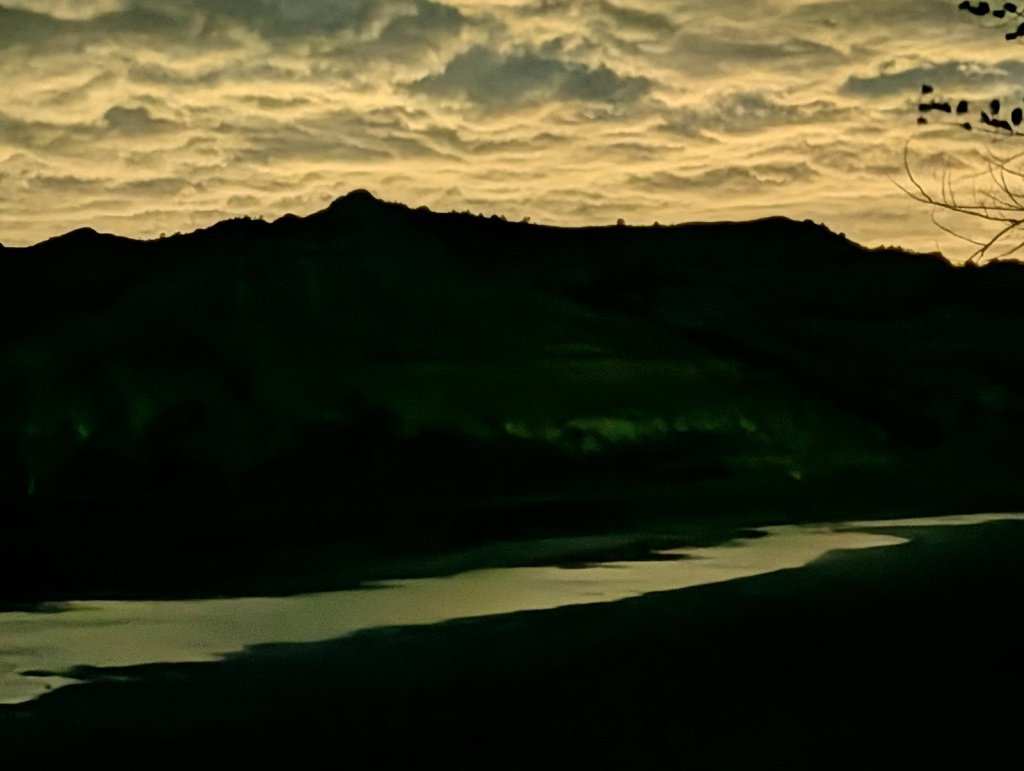
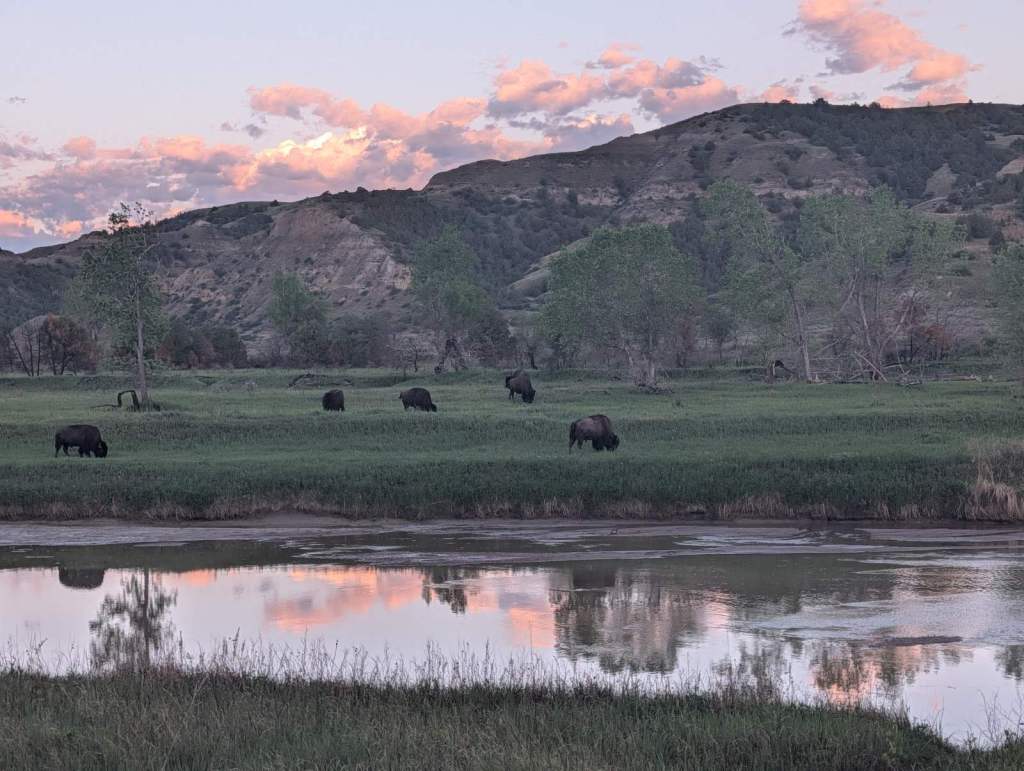
I woke before full light to the sound of the river and something heavier — a low, rhythmic tearing of grass from the other bank, snorts, high pitched calls. They were already up. The whole herd, grazing in the soft pink and orange of early morning, their dark shapes reflected in the water below them.
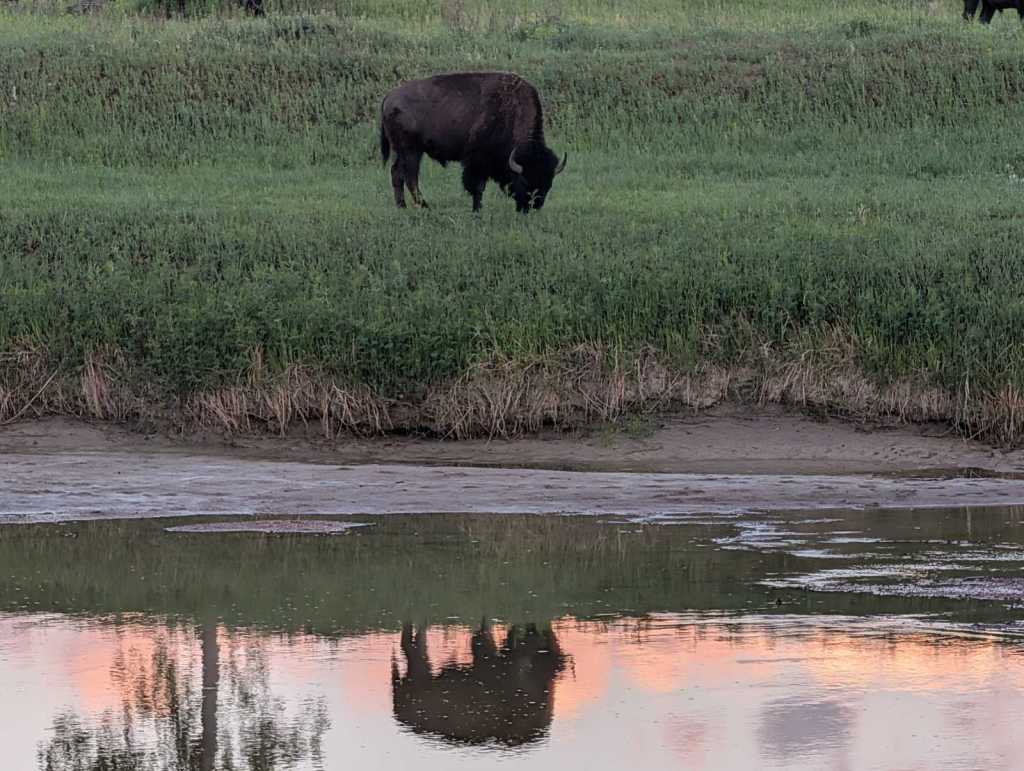
Then, without any signal I could read, the herd began to cross. They forded the river in a loose line — unhurried, deliberate — and came up into the campground. For the better part of an hour they moved through the site, scratching their hides on trees, locking horns, rolling in the dust of open tent sites, grazing, curious, utterly indifferent to me and my little tent. Then, with the same sudden unanimity with which they’d crossed, they were gone in a flash stampede — thundering up the river corridor toward an open stretch of mixed grass and sage, dust rising, the sound fading until there was nothing left but the river and the cottonwood leaves turning in the breeze.
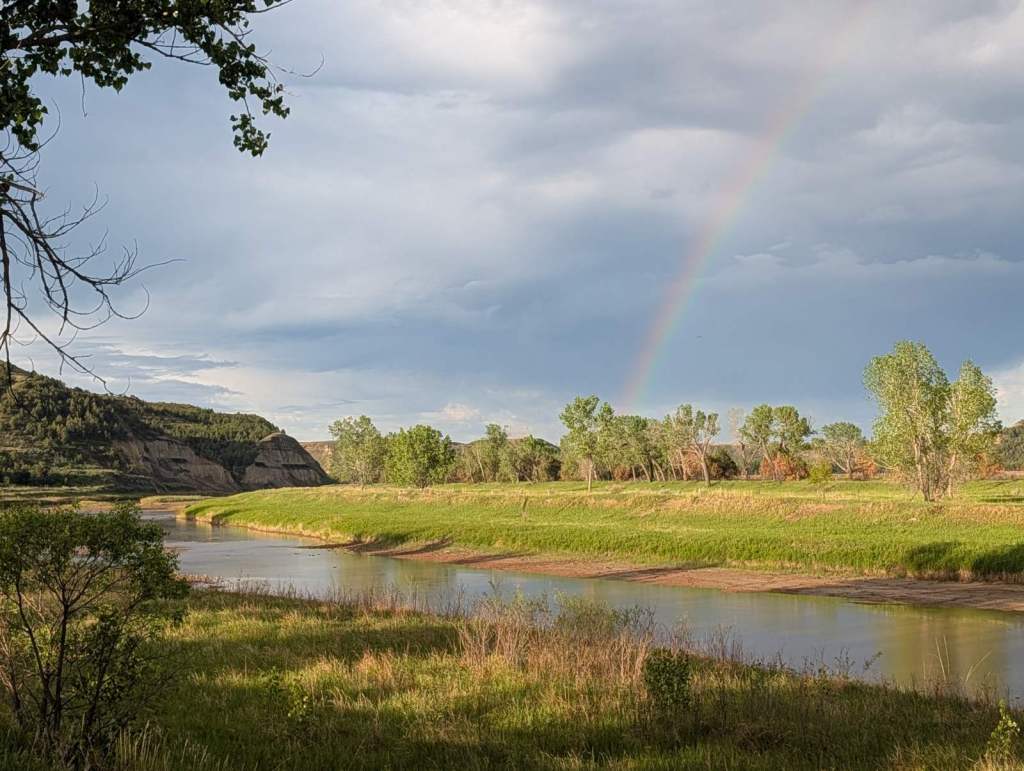
Theodore Roosevelt National Park wasn’t finished showing off. After a brief morning thunderstorm blew through, the sun returned and a rainbow developed across the banks of the Little Missouri river.
Theodore Roosevelt National Park is located near Medora, North Dakota. The South Unit’s Cottonwood Campground sits directly on the Little Missouri River. Bison encounters at camp are common — and unhurried. Site 55 is a riverside site worth requesting by name. The park is open year-round.

